 English
How to Stop Translating in Your Head When Speaking English
Many English learners understand English well when reading or listening, but struggle during conversations. Stop translating in your head
 English
Many English learners understand English well when reading or listening, but struggle during conversations. Stop translating in your head
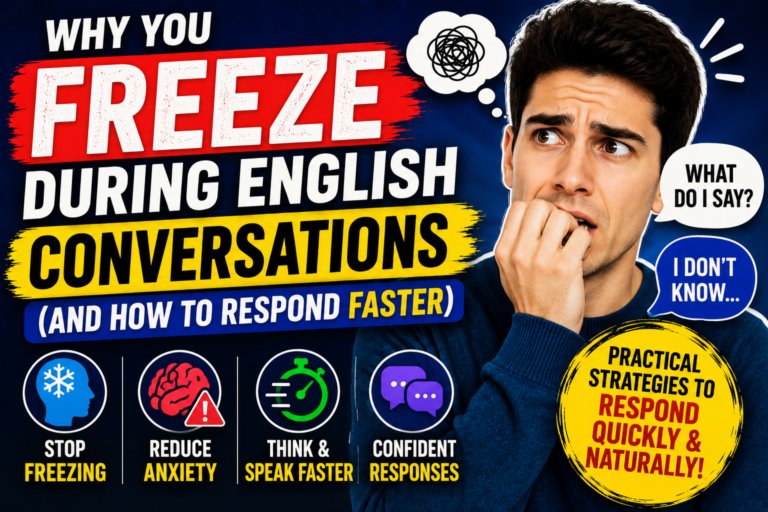 English
Freeze during English conversations long enough… and even simple conversations start to feel stressful.
 English
You may understand English perfectly when reading or listening, but when it’s time to speak, your mind suddenly goes blank.
 English
If you want to speak English fluently, learning individual words is not enough.
You need to learn phrases.
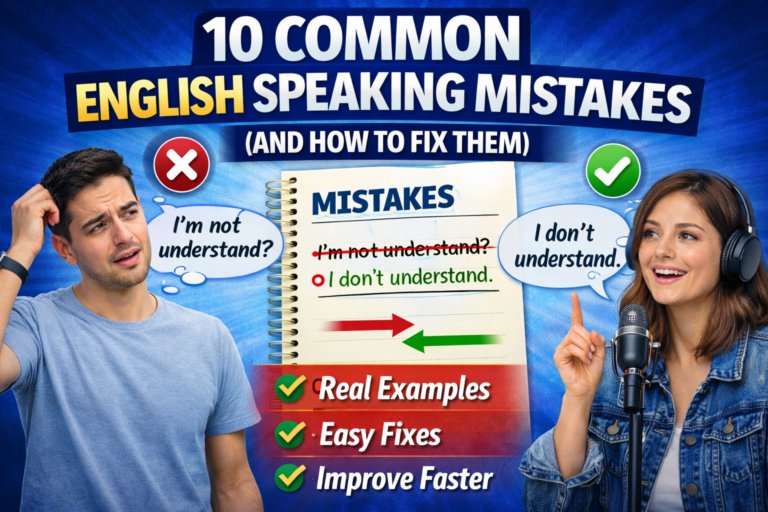 English
English speaking mistakes are among the biggest reasons learners struggle with fluency, even after months or years of practice.
 English
Most learners study English… but they don’t actually practice speaking. You need a daily speaking routine.
 English
If you’re learning English, one question keeps coming up:
How do I speak English fluently without getting stuck or translating in my head?
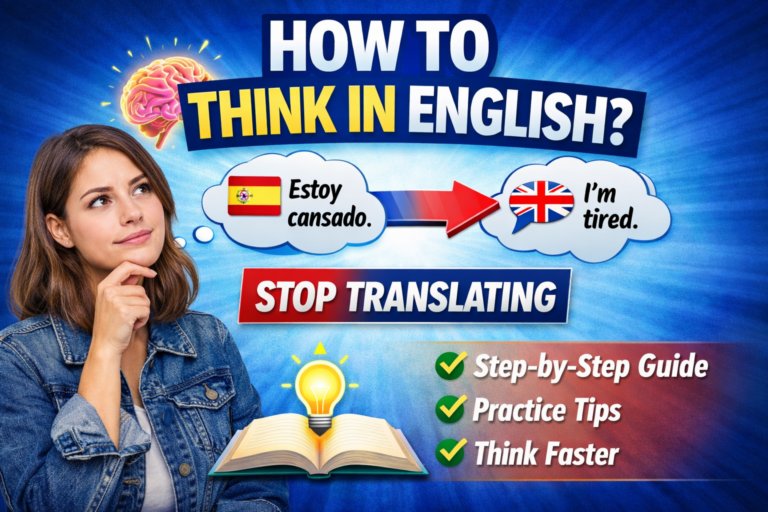 English
If you want to speak English fluently, there’s one skill that changes everything:
Thinking in English.
Most learners don’t realize this is the real problem.
 English
If you’re trying to sound natural in conversations, learning better responses than “I’m fine” is one of the fastest ways to upgrade your English.
 English
Conversational English practice is the fastest way to stop feeling stuck when speaking. You might understand grammar
Insert your email signup form below