

If you want to speak English fluently, there’s one skill that changes everything:
Thinking in English.
Most learners don’t realize this is the real problem.
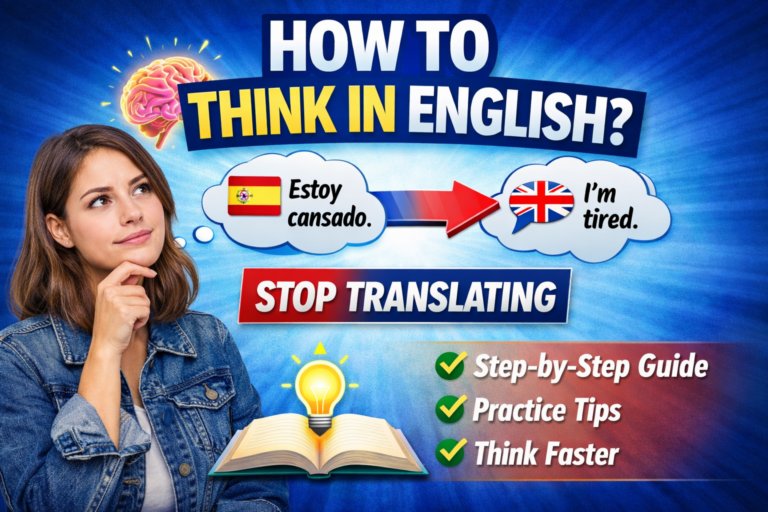
You understand English. You know the words. But when it’s time to speak, your brain does this:
Native language → translate → English → speak
That delay is what makes you feel slow, stuck, and not confident.
In this guide, you’ll learn how to think in English step by step, even if you’re a beginner.
Why You Struggle to Think in English
Let’s be honest… translation feels natural.
You’ve been thinking in your native language your whole life.
So when you try to speak English, your brain automatically goes back to what it knows.
The problem is:
- Translation takes time
- It breaks your flow
- It makes speaking stressful
Fluent speakers don’t translate.
They think directly in English.
What It Actually Means to Think in English
It doesn’t mean thinking in complex sentences.
It means:
- Thinking in simple ideas
- Using basic words quickly
- Reacting without translating
For example:
Instead of thinking:
“I am feeling a bit exhausted due to the activities of today…”
You think:
“I’m tired.”
Simple. Fast. Natural.
Step 1: Start with Single Words
Don’t try to think in full sentences yet.
Start small.
Look around and name things in English:
- “Table”
- “Phone”
- “Food”
- “Chair”
This trains your brain to connect objects directly to English words.
No translation.
Step 2: Move to Simple Sentences
Once you’re comfortable with words, combine them.
Think in short sentences like:
- “I’m eating.”
- “This is good.”
- “I like this.”
Keep it simple.
Fluency starts with clarity, not complexity.
Step 3: Describe What You’re Doing
This is one of the easiest ways to practice.
Talk to yourself in your mind (or out loud):
- “I’m walking to the kitchen.”
- “I need to finish this.”
- “I’m feeling tired.”
You’re turning daily life into practice.
Step 4: Use Real-Life Situations
Imagine conversations in your head.
For example:
You’re at a store:
“How much is this?”
“Can I get this one?”
You’re talking to a friend:
“I watched a movie yesterday.”
“It was really interesting.”
This builds real speaking ability.
Step 5: Stop Translating on Purpose
This part takes effort.
When you notice yourself translating, pause.
Then:
👉 Rephrase the idea using simpler English
Example:
Instead of:
Trying to translate a complex sentence
Say:
“I don’t understand.”
“I need help.”
You’re training your brain to stay in English.
Step 6: Think in Questions and Answers
This is powerful.
Ask yourself questions in English:
- “What am I doing?”
- “What do I need?”
- “What should I do next?”
Then answer:
- “I’m working.”
- “I need food.”
- “I should rest.”
This creates natural conversation flow in your mind.
Step 7: Practice Daily (Even for 10 Minutes)
You don’t need hours.
Just consistency.
Simple routine:
- 5 minutes naming things
- 5 minutes thinking in sentences
Do this every day.
You’ll start noticing:
👉 Less translation
👉 Faster thinking
👉 Easier speaking
Common Mistakes to Avoid
1. Trying to think in perfect English
You don’t need perfect grammar in your thoughts.
2. Using difficult words
Simple English is better for fluency.
3. Giving up too early
It feels strange at first. That’s normal.
How This Connects to Speaking Fluently
If you can think in English…
You can speak in English.
That’s why this skill is so important.
👉 For a complete step-by-step guide on speaking fluently, read this:
How to Speak English Fluently (Step-by-Step Guide for Beginners)
Final Thoughts
Thinking in English is not something you “learn once.”
It’s something you practice daily.
Start small:
- Words
- Simple sentences
- Daily thoughts
Over time, your brain will stop translating.
And when that happens… speaking becomes natural.
This article is part of our complete guide on speaking fluently. Read it here
https://fluent-eng.com/how-to-learn-english-faster-study-habits-that-work/