

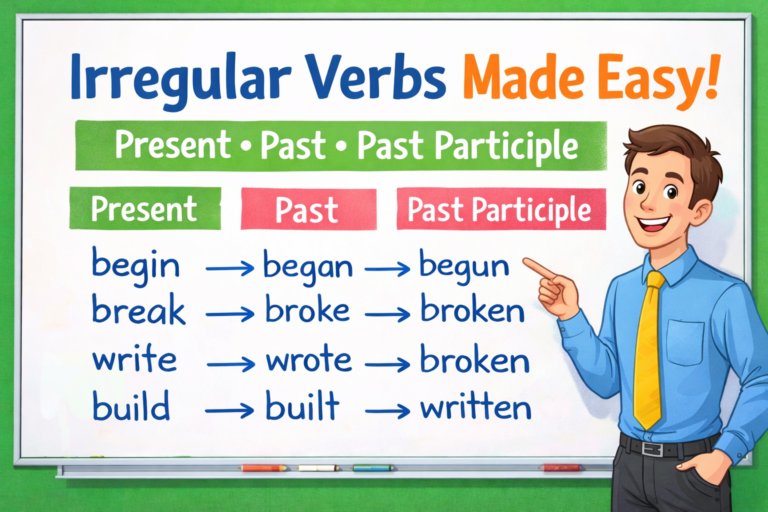
Irregular Verbs in English often confuse learners, but with clear patterns and examples, they become much easier to understand. Many English verbs do not follow the usual “-ed” rule in the past tense. Instead, they change in different ways, and these changes must be learned through practice and exposure. This guide will help beginner and intermediate English learners understand irregular verbs in English step by step, using simple explanations and short example sentences.
What Are Irregular Verbs in English?
Irregular verbs in English are verbs that do not form their past tense or past participle by adding -ed. Each irregular verb has its own form, which is why learners often need to memorize them.
For example:
- Regular verb: work → worked → worked
- Irregular verb: go → went → gone
In this article, you will see Irregular Verbs in English presented in three forms:
- Present (base form)
- Past
- Past participle
Each verb also includes clear, short sentences to show how it is used in real English.
Why Learning Irregular Verbs in English Is Important
You hear irregular verbs in English every day in conversations, movies, books, and news. Without them, it is very hard to talk about the past or describe experiences.
Learning Irregular Verbs in English helps you:
- Speak more naturally
- Understand native speakers
- Write correct sentences
- Gain confidence in conversations
How to Use This Guide
For each verb below, you will see:
- The present form
- The past form
- The past participle
- One short sentence for each form
This structure makes irregular verbs in English easier to remember and practice.
Common Irregular Verbs in English (With Examples)
1. Begin – Began – Begun
- Present: I begin my class at nine.
- Past: I began my class early yesterday.
- Past participle: I have begun a new course.
2. Break – Broke – Broken
- Present: I break the rules sometimes.
- Past: I broke my phone last week.
- Past participle: I have broken the screen.
3. Bring – Brought – Brought
- Present: I bring my lunch to work.
- Past: I brought food yesterday.
- Past participle: I have brought my bag.
4. Catch – Caught – Caught
- Present: I catch the bus every morning.
- Past: I caught the bus late.
- Past participle: I have caught a cold.
5. Drive – Drove – Driven
- Present: I drive to school.
- Past: I drove home last night.
- Past participle: I have driven many cars.
6. Find – Found – Found
- Present: I find new words daily.
- Past: I found my keys.
- Past participle: I have found the answer.
7. Forget – Forgot – Forgotten
- Present: I forget names easily.
- Past: I forgot my password.
- Past participle: I have forgotten the address.
8. Give – Gave – Given
- Present: I give help to friends.
- Past: I gave her a gift.
- Past participle: I have given advice.
9. Hold – Held – Held
- Present: I hold the door.
- Past: I held the baby.
- Past participle: I have held this job.
10. Keep – Kept – Kept
- Present: I keep my room clean.
- Past: I kept the secret.
- Past participle: I have kept my promise.
11. Leave – Left – Left
- Present: I leave work at five.
- Past: I left early yesterday.
- Past participle: I have left a message.
12. Meet – Met – Met
- Present: I meet my teacher weekly.
- Past: I met her yesterday.
- Past participle: I have met new people.
13. Take – Took – Taken
- Present: I take notes in class.
- Past: I took a break.
- Past participle: I have taken a test.
14. Teach – Taught – Taught
- Present: I teach English online.
- Past: I taught beginners.
- Past participle: I have taught many students.
15. Think – Thought – Thought
- Present: I think about grammar.
- Past: I thought about the answer.
- Past participle: I have thought carefully.
16. Wear – Wore – Worn
- Present: I wear comfortable shoes.
- Past: I wore a jacket yesterday.
- Past participle: I have worn this before.
17. Write – Wrote – Written
- Present: I write emails at work.
- Past: I wrote a message.
- Past participle: I have written a report.
18. Build – Built – Built
- Present: They build houses.
- Past: They built a school.
- Past participle: They have built many homes.
19. Lose – Lost – Lost
- Present: I lose my keys often.
- Past: I lost my wallet.
- Past participle: I have lost my phone.
20. Send – Sent – Sent
- Present: I send messages daily.
- Past: I sent an email.
- Past participle: I have sent the files.
Tips for Learning Irregular Verbs in English Faster
To master irregular verbs in English, try these strategies:
- Study verbs in small groups
- Read sentences aloud
- Write your own examples
- Practice speaking daily
- Review regularly
The more you see and use irregular verbs in English, the more natural they will feel.
Common Mistakes ESL Learners Make
Many learners:
- Use the present form for the past
- Mix past and past participle forms
- Forget to use “have” with past participles
Understanding irregular verbs in English helps avoid these mistakes.
Final Thoughts
Learning irregular verbs in English does not happen overnight, but with clear examples and regular practice, progress is guaranteed. Focus on understanding how each form is used, not just memorizing lists. Over time, irregular verbs in English will become a natural part of your speaking and writing.
Keep practicing, stay patient, and remember: every sentence you use brings you closer to fluency.
Click below to discover more useful tips for quick English fluency.
https://fluent-eng.com/top-40-used-acronyms-in-english-and-what-they-mean/